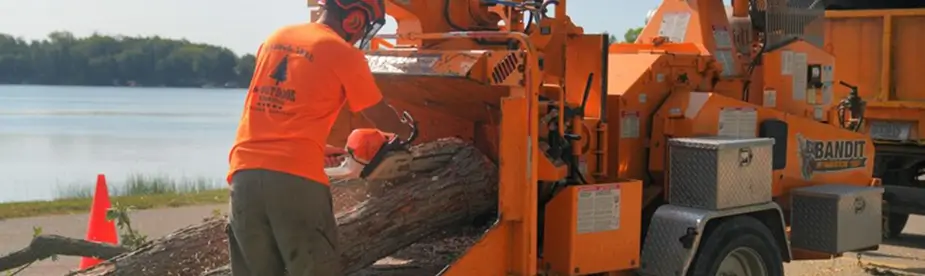
Healthy trees do not happen by accident. In Burlington and across Southeast Wisconsin, good tree maintenance means matching your care to three local realities: glacial silt-loam soil, a humid continental climate, and the hardwood and conifer species that thrive in USDA Hardiness Zone 5b. Get those right and your trees stay strong, safe, and attractive for decades. This guide covers the core practices every property owner in the area should follow.
What Does Proper Tree Maintenance Involve?
Tree maintenance is the ongoing care that keeps trees structurally sound and disease-free. The essential tasks are seasonal pruning, deep watering during dry stretches, correct mulching, soil care, and a yearly inspection by a qualified arborist. Done consistently, these steps prevent the storm damage, pests, and slow decline that lead to expensive emergency removals later on.
Burlington’s Soil and Climate
Burlington sits in USDA Hardiness Zone 5b, where winter lows average negative 10 to negative 15 degrees Fahrenheit. You can confirm your exact zone using the USDA Plant Hardiness Zone Map. Local soils are a glacial silt-loam over a clay subsoil. This profile holds moisture and nutrients well, but it compacts easily under foot traffic and equipment, which starves roots of oxygen and slows water uptake.
The climate is humid continental with four demanding seasons. Spring brings late frosts and saturated soil, summer brings heat and drought, fall is for preparation, and winter delivers freeze-thaw cycles that crack trunks and heave young roots out of the ground. Every maintenance decision should account for the season you are in.
When to Prune Trees in Southeast Wisconsin
Late winter, from February through early March, is the best time to prune most deciduous trees. While trees are dormant, cuts are cleaner, disease pressure is low, and the tree seals its wounds quickly once spring growth begins. This dormant window is ideal for maples, elms, honeylocust, and most shade trees.
Oaks are the critical exception. Never prune oaks between April and October. Oak wilt, one of the most destructive tree diseases in Wisconsin, spreads through sap-feeding beetles drawn to fresh wounds and through root grafts between neighboring oaks. The Wisconsin DNR forest health program tracks oak wilt and other regional threats. If an oak must be cut during the growing season after storm damage, seal the wound right away.
For routine shaping and deadwood removal, professional tree trimming keeps canopies healthy, while structural tree pruning strengthens young and mature trees against wind and snow load.
How to Water Trees Correctly
Most established trees in Burlington do not need extra water in a normal year, since the region receives about 34 inches of rain spread across the growing season. Watering matters most for newly planted trees in their first two to three seasons, trees in compacted soil, and any tree during extended drought.
When you do water, technique beats volume:
- Water deeply. Set a hose to a slow trickle at the drip line for 30 to 60 minutes so moisture reaches the deep roots.
- Water in the morning to cut evaporation and let foliage dry, which lowers disease risk.
- Check first. Push a screwdriver into the soil at the drip line. If it slides in six inches easily, hold off.
- Do not overwater. Waterlogged clay suffocates roots, especially in low-lying yards.
A useful rule for young trees is about 10 gallons per week for each inch of trunk diameter, applied slowly at the base.
Mulching the Right Way
Mulch is one of the simplest, highest-value maintenance practices. A proper ring retains moisture, moderates soil temperature, suppresses weeds, and feeds soil life as it breaks down.
Apply two to three inches of organic mulch such as shredded hardwood bark or wood chips. Spread it out toward the drip line, or keep at least a three-foot ring around the trunk. Leave a three to six inch gap between the mulch and the bark. Mulch piled against the trunk, often called volcano mulch, traps moisture, invites rot, and attracts pests. Refresh the layer each spring or fall, but never stack it past three inches total.
Soil Health and Fertilizing
Before you fertilize, test your soil. The University of Wisconsin Extension forestry program offers testing guidance and local tree care resources. Mature trees in healthy soil rarely need feeding. Young trees, or trees showing yellowing leaves and stunted growth, benefit from a slow-release fertilizer in early spring. Stop fertilizing by late September so trees can harden off for winter.
If soil is compacted near driveways or patios, vertical mulching or air spading loosens it without cutting roots. Work compost into the top layer and let fallen leaves decompose under trees to rebuild structure naturally.
Common Trees in Burlington and Their Care Needs
| Species | Type | Maintenance Notes | Hardiness | Common Issues |
|---|---|---|---|---|
| Sugar Maple | Deciduous | Prune in late winter and avoid aggressive spring pruning during sap flow | Zone 3–8 | Tar spot, verticillium wilt, aphid infestations |
| Northern Red Oak | Deciduous | Dormant-season pruning helps reduce disease transmission risk | Zone 3–7 | Oak wilt, defoliating caterpillars, and foliar disease |
| Bur Oak | Deciduous | Low-maintenance once established, with strong drought tolerance | Zone 3–8 | Bur oak blight, borer stress in declining trees |
| White Pine | Evergreen | Requires drainage, reduced salt exposure, and selective seasonal pruning | Zone 3–8 | Needle cast, rust disease, and weevil damage |
| Honeylocust | Deciduous | Open canopy works well for lawns, but young bark needs protection | Zone 3–9 | Mites, webworms, and branch cankers |
| Silver Maple | Deciduous | Frequent structural pruning helps reduce breakage risk | Zone 3–9 | Storm damage, shallow roots, scale insects |
| American Basswood | Deciduous | Performs well in clay and shade with periodic structural maintenance | Zone 3–8 | Japanese beetles, aphid honeydew, and leaf miner damage |
| Colorado Spruce | Evergreen | Avoid topping and maintain airflow to reduce disease pressure | Zone 2–7 | Needle cast, canker disease, spider mites |
Critical Note: Oak Wilt Prevention
Oak wilt is one of the most destructive tree diseases in Wisconsin. It spreads through root grafts between nearby oaks and through sap-feeding beetles that are attracted to fresh pruning wounds. Never prune oaks between April and October in Southeast Wisconsin. If an oak must be cut during this period, seal the wound immediately with pruning sealer.
Month-by-Month Tree Maintenance Calendar for Burlington
January and February
- Inspect trees for structural damage from ice and snow loads.
- Plan pruning projects. This is the ideal window for pruning oaks, maples, elms, and most shade trees.
- Order any replacement trees or new plantings for spring installation.
March and April
- Complete dormant-season pruning before buds break.
- Remove tree wrap from trunks once consistent temperatures above freezing arrive.
- Check mulch depth; refresh to 2 to 3 inches if it has decomposed or blown away.
- Schedule a professional tree health inspection with a certified arborist.
May and June
- Monitor newly planted trees for signs of transplant shock: wilting, leaf scorch, and slow leafing out.
- Water newly planted trees deeply once per week if rainfall is below one inch.
- Watch for early-season pests like tent caterpillars, aphids, and leaf miners.
- Prune spring-flowering trees and shrubs after blooms fade.
July and August
- Water established trees deeply during drought. One inch of water per week, applied slowly, is the target.
- Inspect for Japanese beetles on basswood, linden, and birch.
- Avoid heavy pruning during the heat of summer, which stresses trees.
- Monitor for signs of bacterial leaf scorch, oak wilt, and needle diseases on evergreens.
September and October
- Stop fertilizing. Trees need to begin hardening off for winter.
- Apply fresh mulch before the ground freezes. Two to three inches is enough.
- Fall is an excellent time to plant new trees. Roots establish through the cool season.
- Allow leaves to remain under trees as natural mulch and soil amendment.
November and December
- Wrap trunks of young, thin-barked trees to prevent sunscald and frost cracking.
- Protect newly planted trees from rabbit and deer browsing with wire guards.
- Inspect branches for deadwood and note any trees that need dormant-season pruning.
- Clear heavy wet snow from evergreen branches by gently brushing upward.
Frequently Asked Questions About Tree Maintenance in Burlington
When is the best time to prune trees in Burlington, WI?
Late winter, specifically February through early March, while trees are fully dormant. This timing reduces disease risk and allows trees to seal wounds quickly when growth resumes in spring. The critical exception is oaks, which must never be pruned between April and October due to oak wilt risk.
How often should trees be professionally inspected?
Annual inspections are recommended for properties with mature trees near homes, driveways, or play areas. Schedule additional inspections after any severe storm with wind gusts exceeding 50 mph.
What is the best mulch for trees in Wisconsin?
Shredded hardwood bark and aged wood chips are the best options. They decompose slowly, improve soil structure, and do not blow away easily. Avoid dyed mulches and rubber mulch, which do not benefit soil health.
How much water does a newly planted tree need?
About 10 gallons per week for each inch of trunk diameter during the first two growing seasons. Water slowly at the base of the tree to encourage deep root growth. Reduce watering in fall to let the tree harden off.
Can I plant a tree where one was just removed?
You can, but it is better to offset the new planting a few feet from the old stump location. Old roots and wood chips change the soil chemistry as they decompose. Wait at least one growing season and amend the soil with compost before planting.
Which trees should I avoid planting in Burlington?
Avoid silver maple (weak wood, invasive roots), Bradford pear (weak branch structure, splits in storms), and any ash species (due to ongoing emerald ash borer devastation). Instead, choose oaks, sugar maples, honeylocust, or native conifers that thrive in Zone 5b conditions.
Do I need to fertilize my trees?
Not always. Mature, established trees in healthy soil rarely need fertilizer. Young trees and trees showing nutrient deficiency symptoms (yellowing leaves, stunted growth) benefit from a slow-release fertilizer applied in early spring. Always test your soil before fertilizing.
How do I protect trees from deer and rabbit damage?
Wrap trunks of young trees with hardware cloth or commercial tree guards from ground level to above the snow line. Remove guards in spring once the ground thaws. Established trees with thick bark are generally resistant to animal browsing.
What are signs my tree is dying?
Sparse or undersized leaves, dead branches throughout the crown, bark falling off in large sections, mushrooms at the base, and a significant lean that was not there before. If you see multiple signs, schedule a professional assessment promptly.
Is fall a good time to plant trees?
Yes. Fall planting gives roots time to establish during the cool, moist months before winter. The ideal window in Burlington is mid-September through mid-October, before the first hard freeze. Apply mulch and water well at planting.
How do I know if my soil is compacted?
Push a screwdriver or soil probe into the ground near your tree. If you cannot easily push it 6 inches deep, the soil is likely compacted. Other signs include standing water after rain, thin or bare grass around the tree base, and surface roots growing above ground level.
Should I seal pruning cuts on my trees?
In most cases, no. Trees seal their own wounds through a process called compartmentalization. Wound sealers can actually trap moisture and promote decay. The one exception is oaks pruned during the growing season, where sealing the wound helps prevent oak wilt transmission.
Keep Your Burlington Trees Healthy for Decades
Tree maintenance isn’t complicated, but it is highly specific to your neck of the woods. The soil on your property, local weather patterns, and the exact species you’re growing all dictate the care each tree needs. To keep your landscape safe and thriving, looping in a reliable tree service in Burlington is the easiest way to catch local pest issues or soil deficiencies before they become expensive problems.
Follow the seasonal calendar above, water and mulch correctly, and schedule annual inspections. Your trees will reward you with shade, beauty, higher property value, and structural integrity for generations.